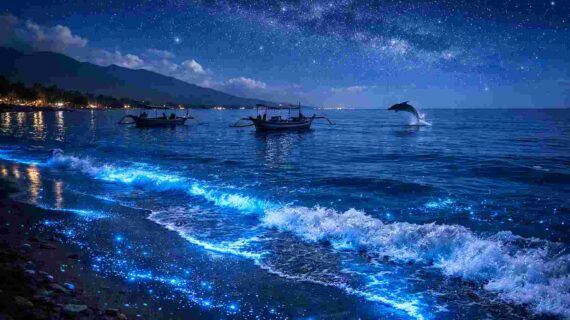
Do we really see plankton in Lovina, Bali? This is a question many travelers ask when planning a visit to the calm northern coast of Bali. Known for its peaceful beaches, dolphin tours, and relaxed atmosphere, Lovina also offers a lesser-known natural phenomenon that fascinates visitors: glowing plankton at night. While not always guaranteed, the presence of bioluminescent plankton in Lovina can create a magical experience that feels almost surreal.
What Are Bioluminescent Plankton?
Bioluminescent plankton are microscopic marine organisms that emit light when disturbed. This natural glow is caused by a chemical reaction within the plankton’s cells, often triggered by movement in the water. When waves crash, fish swim, or even when you step into the sea, the plankton can light up in shades of blue or green, creating a sparkling effect.
This phenomenon is often referred to as “sea sparkle” and can be found in various parts of the world, including Bali. However, its appearance depends heavily on environmental conditions.
Can You Really See Plankton in Lovina?
Yes, you can really see plankton in Lovina, Bali—but it is not something you can expect every night. The appearance of glowing plankton depends on several factors such as water temperature, tide conditions, moonlight, and the concentration of plankton in the area.
Lovina’s relatively calm waters and lower levels of light pollution compared to southern Bali make it a good location for spotting bioluminescence. On the right night, the shoreline can glow beautifully, especially when the water is disturbed.
Best Time to See Plankton in Lovina
Timing plays a crucial role in witnessing this natural light show. While there is no fixed schedule, some conditions increase your chances:
Dark Nights
The best time to see plankton is during nights with minimal moonlight. A new moon or nights when the moon rises late are ideal because the darker the surroundings, the more visible the glow becomes.
Calm Weather
Plankton tend to gather and become more visible when the sea is calm. Strong winds or rough waves can disperse them, making the glow less noticeable.
Warmer Months
In general, warmer sea temperatures can support higher plankton activity. While plankton can appear year-round, many travelers report better sightings during the dry season when conditions are more stable.
Where in Lovina Can You Spot Plankton?
Lovina is not a single beach but a stretch of coastline made up of several villages. Some areas are better than others for spotting plankton due to lower light pollution and quieter surroundings.
Quiet Beach Areas
Look for beaches that are less crowded and have minimal artificial lighting. The darker the environment, the easier it is to see the glow in the water.
Away from Resorts
While beachfront resorts are convenient, their lighting can reduce visibility. Walking a little further along the beach can significantly improve your chances.
Near Natural Shorelines
Areas with fewer human disturbances and more natural surroundings often provide better conditions for plankton to thrive.
How to Increase Your Chances of Seeing Plankton
Even though sightings are not guaranteed, there are ways to improve your chances:
Go Late at Night
The later it gets, the darker the environment becomes. Late-night walks along the beach can increase your chances of spotting glowing water.
Disturb the Water
If plankton are present, you may not see them immediately. Try gently moving your hand through the water or walking along the shoreline to trigger the glow.
Stay Multiple Nights
Because plankton visibility varies from night to night, staying in Lovina for a few days increases your chances of experiencing the phenomenon.
Ask Locals
Local guides and residents often have up-to-date knowledge about recent sightings. They can recommend the best time and place based on current conditions.
Read more: How Long Is the Lovina Dolphin Tour?
Is It Safe to Swim with Plankton?
In most cases, bioluminescent plankton are harmless to humans. Swimming in water that contains them is generally safe, and many people enjoy the unique experience of glowing water around their bodies.
However, it’s always important to be cautious. Some types of plankton can cause mild skin irritation, although this is rare. If you have sensitive skin, it’s best to limit prolonged exposure and rinse off afterward.
Read more: Where Can I See Dolphins in Bali?
Why Don’t People Talk About It More?
Lovina is more famous for its dolphin tours, which take place early in the morning. As a result, many visitors focus on daytime activities and overlook the potential beauty of the nighttime ocean.
Additionally, because plankton sightings are unpredictable, they are not heavily marketed as a guaranteed attraction. This makes the experience even more special for those who do encounter it.
Read more: What Time of Year Is Best for Dolphin Watching in Lovina Bali?
Comparing Lovina to Other Plankton Spots
While Lovina can offer beautiful plankton displays, it is not considered a world-famous hotspot for bioluminescence. Locations like certain tropical bays or islands with consistent plankton blooms may provide more reliable sightings.
However, what makes Lovina unique is the combination of tranquility, fewer crowds, and the possibility of witnessing this natural phenomenon in a peaceful setting. It feels more like a hidden gem rather than a commercial attraction.
Read more: What Time Are Dolphins Most Active in Lovina Bali?
Tips for Capturing the Experience
Photographing bioluminescent plankton can be challenging because of the low light conditions. If you want to capture the moment:
Use a Camera with Manual Settings
A camera that allows long exposure can help capture the glow more effectively than a smartphone.
Avoid Flash
Flash photography will overpower the subtle glow of the plankton and ruin the natural effect.
Be Patient
It may take time to find the right spot and conditions. Enjoy the moment rather than focusing only on capturing it.
Read more: What Should I Wear on a Dolphin Tour Lovina Bali?
Final Thoughts
Do we really see plankton in Lovina, Bali? The answer is yes—but only if nature cooperates. While it’s not a guaranteed attraction, the possibility of witnessing glowing plankton adds an element of mystery and excitement to your trip.
Lovina offers a quieter, more relaxed side of Bali, and the chance to see bioluminescence is like a hidden bonus for those who explore beyond the usual tourist activities. If you’re patient, curious, and willing to spend time by the sea at night, you might just experience one of the most magical natural displays Bali has to offer.
In the end, seeing plankton in Lovina is not just about ticking off a checklist—it’s about embracing the unpredictability of nature and enjoying the simple wonder of the ocean after dark.